

The material
A mineral material, certified and measured.
Stone, turned into a premium material: printable and made to last.
Calcium carbonate sourced notably from marble offcuts, with a small share of binder made of high-quality recycled white PE: NotPaper withstands water, grease and cold by nature.
- Cradle to Cradle Bronze
- 1.1 kg CO₂e/kg
- No trees, no water, no chlorine bleaching
2026-2030
Regulation does the sorting.
The question is no longer whether your packaging will change, but which materials will stay. Stone is one of them: outside the EUDR, measured, certified, a material that carries through the 2026-2030 texts.
Secure your 2026-2030 volumes and margin. We reduce your at-risk references, and you get ahead while others are caught out.
What the 2026-2030 sorting puts under pressure
-
Two bonded materials
Film-laminated paper
Wood fibre and a plastic film bonded together, to be justified against the 2030 recyclability criteria.
-
Virgin fibre to trace
Virgin paper and board
The EUDR requires forest traceability of the fibre from 30 December 2026.
-
Single use
Disposables
The PPWR pushes packaging reduction and reuse.
On the other side
NotPaper, a mineral material for reuse.
A mineral base with no wood fibre, outside the scope of the EUDR. 23% less CO₂e than virgin paper. Real reusable objects: a customer reports cardboard boxes reused up to 11 times.
At a glance
What the material brings to your object.
Each backed by the proof file.
-
Waterproof
Water beads up, the surface stays crisp.
-
Tear-resistant
It stands up to repeated handling.
-
Grease-resistant
Hands, creams, the kitchen: it stays presentable.
-
Frost-resistant
Ice bucket, cold room, down to −46 °C.
-
Tree-free
A mineral base, outside the scope of the EUDR.
-
No water
Made with no process water.
-
No chlorine bleaching
A natural whiteness, with no chlorine bleaching.
-
−23% vs virgin paper
1.1 kg CO₂e per kg, measured by ITRI.
-
Up to −67% vs plastics
−56% against PE and PP, −63% against PET.
-
Cradle to Cradle Bronze
Certificate no. 9561, valid until February 2027.
-
Ready to print
Offset, foil stamping, embossing and spot varnish.
-
Made to be used again
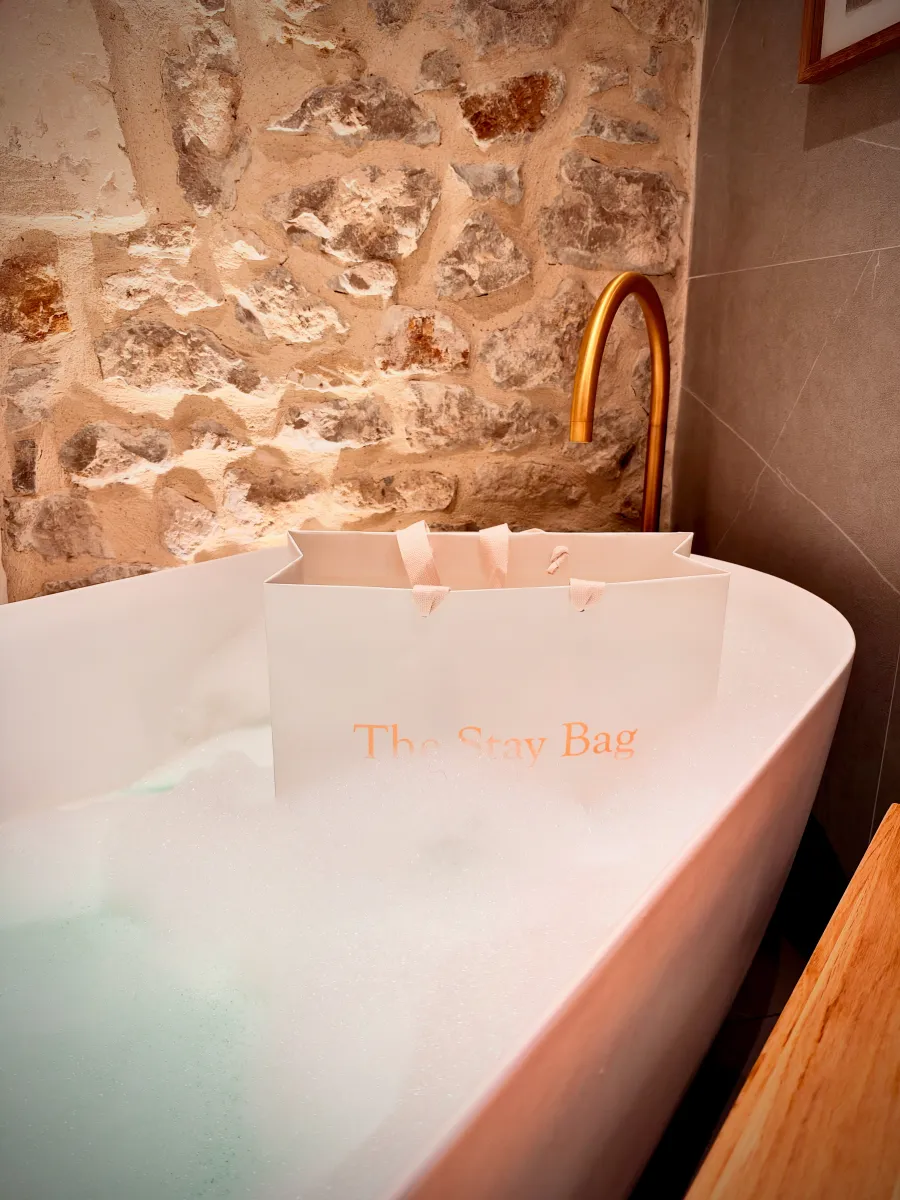
Genuine reusable objects, kept and used again.
The logic
Change the base, not only the surface.
The mineral base brings strength and whiteness, the binding agent flexibility. The object stays beautiful in contact with water, grease and hands.
The material serves the object, the object serves the brand.
Against paper
−23% CO₂e against virgin paper.
Paper is seen as the green choice. Yet it takes trees, lots of water and bleaching, and falls under the EUDR. NotPaper: no trees, no water, no chlorine bleaching, and up to −67% versus plastics.
Per kg of material, from raw material to factory gate. ITRI measurement (PAS 2050, ISO 14067), all ranges. Virgin paper: CEPI average taken from Kiwa certificate K90692/01. Plastics: Columbia CCSI, 2022.
From stone to sheet
Stone powder, worked like a paper.
Limestone is ground to powder, bound, then formed into sheet. Offset, foil, embossing, spot varnish: it prints like a premium paper.
Place your current material next to a NotPaper prototype, and compare.
Request a prototype2026-2030
Where do you stand on the PPWR and the EUDR?
Three deadlines, reviewed with you reference by reference.
-
12 August 2026
PPWR, the packaging regulation
Every package is assessed by its role, its use and its end-of-life route.
-
30 December 2026
EUDR, the deforestation regulation
Wood, paper and board fall under forest traceability, from 30 June 2027 for small companies. NotPaper sits outside its scope.
-
2030
Recyclability criteria
Design-for-recycling criteria. We identify the references to rework now.
The names of the material
Stone paper, rock paper, mineral paper.
The names you will come across, and what they mean.
- Papier de pierre
- The most common name in French: a sheet made of calcium carbonate, the stone of limestone, bound by a cohesion agent.
- Papier minéral
- The same material, named for its mineral base. NotPaper is its certified, measured version.
- Stone paper
- The English term, used by buyers and printers internationally.
- Rock paper
- Another way of saying stone paper, common in North America.
- Rich mineral paper
- The technical name used in material data sheets, often shortened to RMP.
- Papier caillou, papier calcaire
- The familiar names for the same family of materials, found in searches and at trade shows.
- Tree-free paper
- A paper made without trees. NotPaper is one: it starts from stone, and is made with no process water.
- NotPaper
- Our premium mineral material: Cradle to Cradle Bronze certified, measured at 1.1 kg CO₂e per kg, turned into labels, prints and bags in your brand.
Frequently asked questions
The questions we are asked.
What is stone paper?
A material based on calcium carbonate, the stone of limestone, bound by a cohesion agent. It is also called mineral paper, stone paper or rich mineral paper. NotPaper is part of this family: a mineral material, with no wood fibre, that stands up to water and grease by nature.
What is NotPaper's carbon footprint?
1.1 kg CO₂e per kg of material, measured by ITRI (PAS 2050, ISO 14067), from raw material to factory gate. That is 23% less than virgin paper and up to 67% less than plastics, weight for weight.
Why compare with virgin paper?
Paper is seen as the green choice. Yet it takes trees, lots of water and bleaching, and falls under the EUDR. NotPaper is made with no trees, no process water, no chlorine bleaching, and emits 23% less CO₂e.
Is NotPaper material certified?
Yes. The material is Cradle to Cradle Certified® Bronze (Full Scope, certificate no. 9561, standard 3.1), assessed by MBDC, certified since 2013 and valid until 7 February 2027. It is RoHS and REACH compliant.
Does the EUDR apply to NotPaper?
The EUDR targets wood, paper and their derivatives. NotPaper, a mineral material with no wood fibre, sits outside its scope: your packaging leaves forest traceability behind.
And the PPWR?
The PPWR has applied since 12 August 2026. NotPaper answers with durability and reuse, with 23% less CO₂e than virgin paper. In 30 minutes, we identify the packaging to rework by 2030.
What happens to the material after use?
It is made to last and to be used again. The Cradle to Cradle standard assesses material reuse, the manufacturer recycles its own material in-house to produce its corrugated board, and one customer reports boxes reused up to 11 times.
How do we get started?
Show us the item and its use. We propose weight, printing and finishes, then a prototype your teams test before the run.
Where to start
Step one, depending on your role.
-
Procurement
An audit of your references
30 minutes to identify your at-risk references, the volumes involved and the right timeline.
Book the audit -
CSR
The proof file
Cradle to Cradle certificate, ITRI carbon measurement, RoHS and REACH declarations: material to feed your reporting.
See the proof -
Marketing
A prototype in your brand
Your item in NotPaper, with your colours, your inks and your finishes.
Request a prototype -
Packaging and quality
Usage tests
Water, grease, cold, handling: we test on your item, with your inks and adhesives, under your conditions.
See the method
 Evidence & compliance Every figure has its proof. See the proof →
Next step
Let's test the material on your object.
Show us the use: we prepare a prototype and the tests that matter to your teams.