Blog Material
Paper alternative: the print that stands up to water, grease and cold
Ski map, terrace menu, campsite card, bathroom label: what a mineral material brings to your printed items, situation by situation.
Key points
- A printed item lives through very concrete tests: water, grease, cold and repeated handling.
- A mineral material carries its resistance in the material itself, without lamination, with the look of high-end paper.
- It comes into its own when the item lives outdoors, in people's hands or near water.
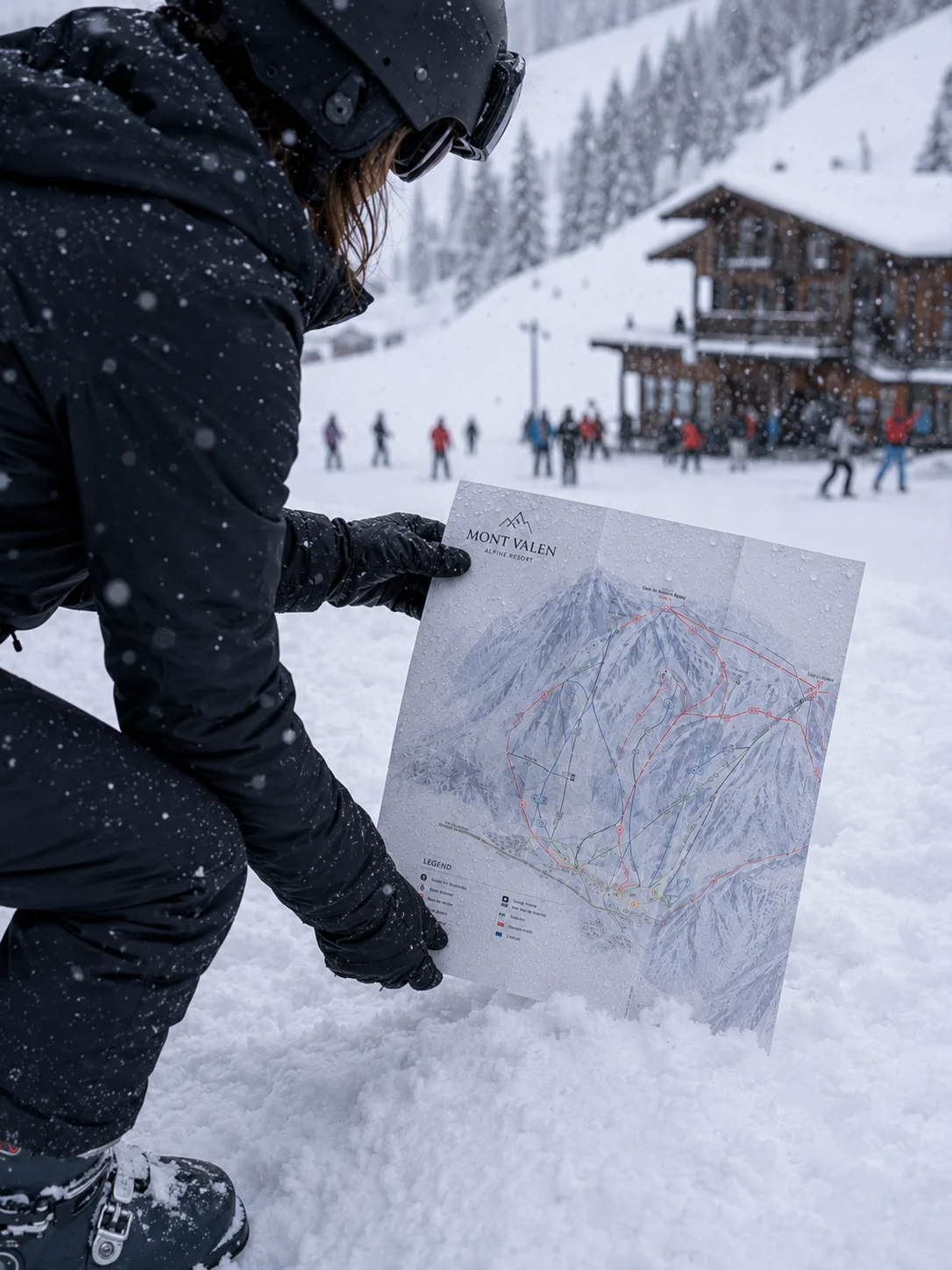
A piste map in the snow, a terrace menu on a stormy evening, a campsite card that spent the day in a beach bag. These printed items live outdoors, in people’s hands, near water. Here is what a mineral material brings them, situation by situation.
What a printed item really goes through
Paper is a fibre: water, grease and folds wear it down over time. To protect it, it gets laminated, varnished or film-coated: a layer added on top of the fibre, with a more utilitarian look.
A mineral material changes the base itself. NotPaper is made of calcium carbonate, sourced notably from marble offcuts, and a small share of binder made of high-quality recycled white PE, with no wood fibre. It resists water depending on the application and in our usage tests, without lamination: the resistance comes from the material.
And on carbon, it does better than virgin paper: 23% less CO₂e, made with no trees, no process water and no chlorine bleaching, and up to 67% less than plastics, weight for weight. The measurements and the Cradle to Cradle label are detailed on the Proof and compliance page.
Situation by situation
| Situation | What the printed item goes through | What a mineral material changes |
|---|---|---|
| Piste map in the snow | Snowflakes melting on gloves, the map folded and unfolded in the cold | It resists water and is designed for repeated unfolding, even with gloves on |
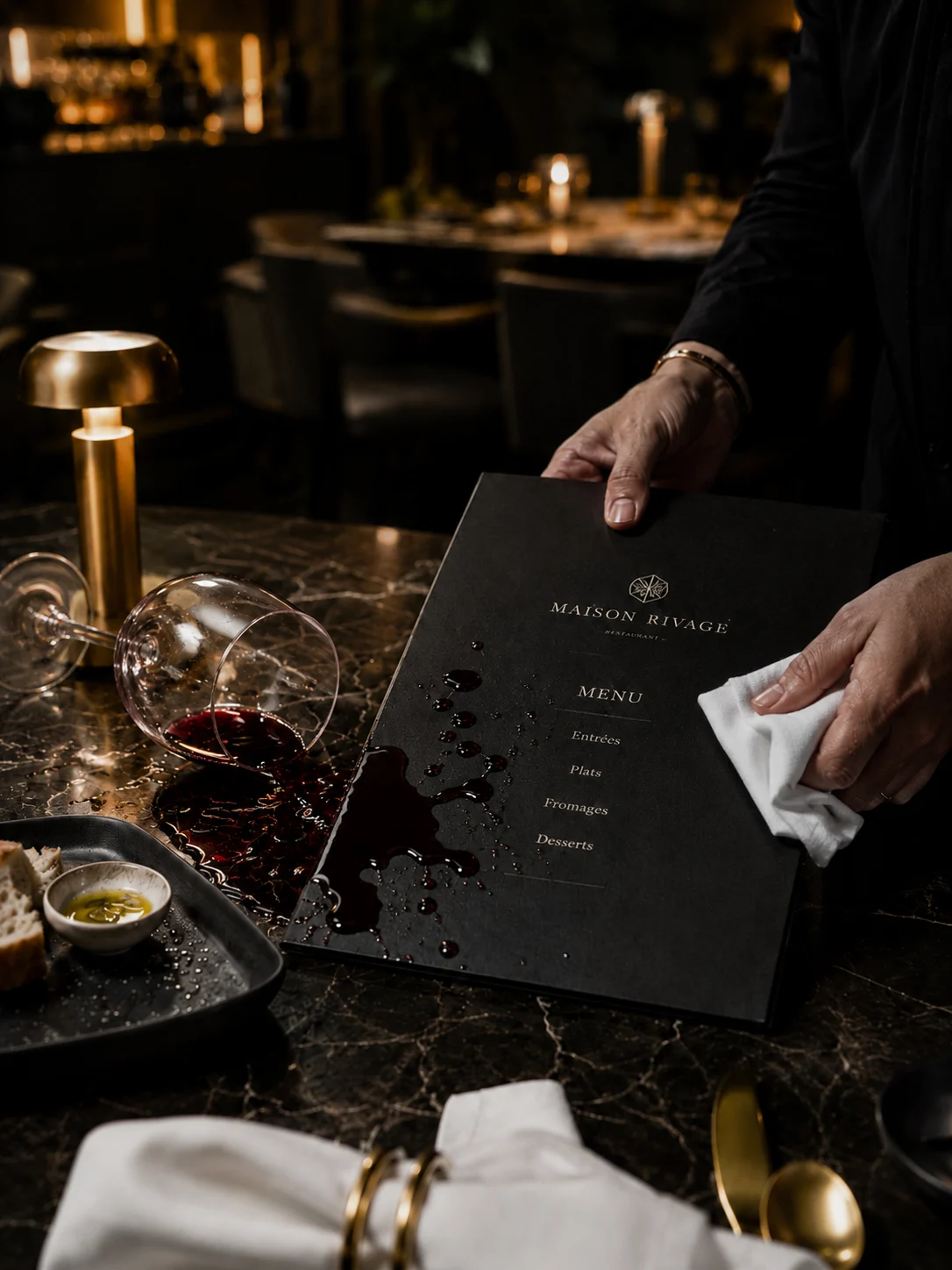
| Terrace menu | A spilled glass, a drop of oil, one service after another | Wipe it: the menu stays presentable from one service to the next |
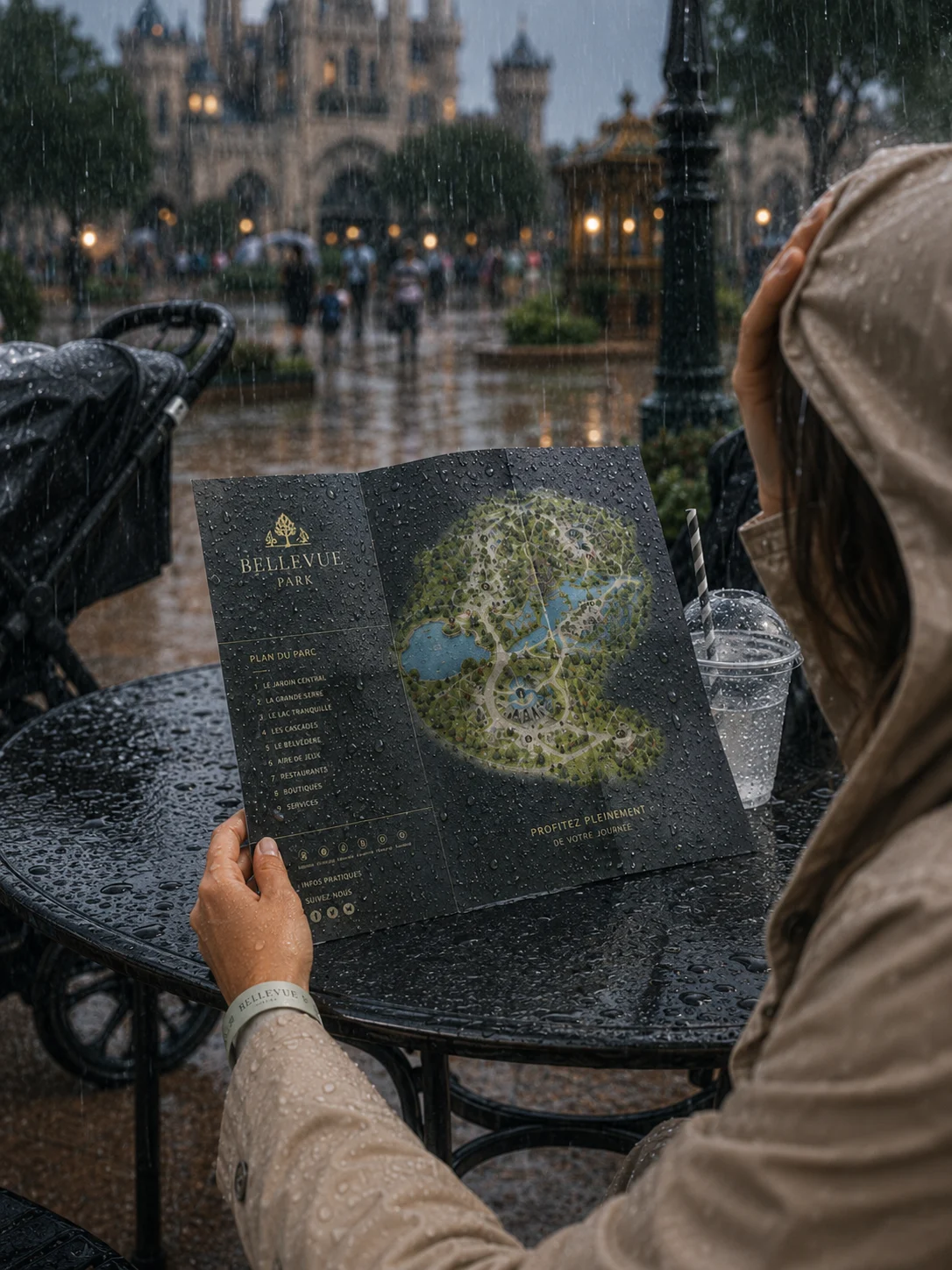
| Campsite card in the rain | Rain, pockets, meals outdoors | It stays legible for the whole stay, folded and unfolded |
| Bathroom label | Steam, wet hands, cream | It withstands water and grease depending on the application, with a refined look |
In all four cases, the printed item moves around: it is picked up, folded, set down, splashed. A mineral material is made for that life, with the print quality of a beautiful paper.
Water, grease, cold, handling: four tests
Before choosing a material, name the real test your item faces.
- Water: rain, melting snow, condensation, ice bucket, bathroom.
- Grease: sun cream, oil, fingers, sauce.
- Cold: a map taken out of a pocket at zero degrees, handled with gloves.
- Handling: folding, refolding, rubbing, passing from hand to hand all season long.
A mineral material answers all four at once: it is designed to resist water, grease, cold and repeated handling, depending on the application, and we validate it with you on a prototype.

When to move to a mineral material
Paper remains perfect for a one-night flyer, a ticket, a document read once in the dry. A mineral material comes into its own when the item lives outdoors, in your customers’ hands or near water, and when you want it to last.
The right material is the one that keeps your printed item beautiful until the very last customer.
How to choose it
The best test is use: wet it, stain it, fold it.
- Take the real item: same format, same finishes.
- Recreate its setting: a bucket of water, cream on your fingers, the freezer, repeated folding.
- Look at the result after use, at the end of the day.
- Validate the finishes: inks, foil, adhesives, on your project.
If your printed item is a map, a menu, a welcome card or a document handed to customers, we test it with you, on your format and your finishes, before any production run. Everything is on the printed items and everyday objects page.
The product in this article Print media & objects made for use Menus, maps, cards and items that pass from hand to hand without wearing out. Discover the supports → Frequently asked questions
The questions we get asked.
Which paper alternative for an item used outdoors?
A material that resists water by nature, depending on the application. NotPaper is a mineral material: calcium carbonate, sourced notably from marble offcuts, and a small share of binder made of high-quality recycled white PE. It is designed to resist water, grease and tearing.
Does a paper alternative keep a premium finish?
That is the whole point. The NotPaper material takes on the codes of high-end paper: printing, solid colours and patterns, with hot foil, embossing or spot varnish as options (finishes added as you choose).
How do I know if my printed item would gain from a paper alternative?
Put it through the tests of its real setting: water, grease, cold, folding, gloved hands. A prototype of your own item gives you the most accurate answer.
Blog
Read next

Stone paper: what it is and what it changes
Stone paper, mineral paper: a material made from calcium carbonate, with no wood fibre. What it changes against water, grease and in the hand. Read the article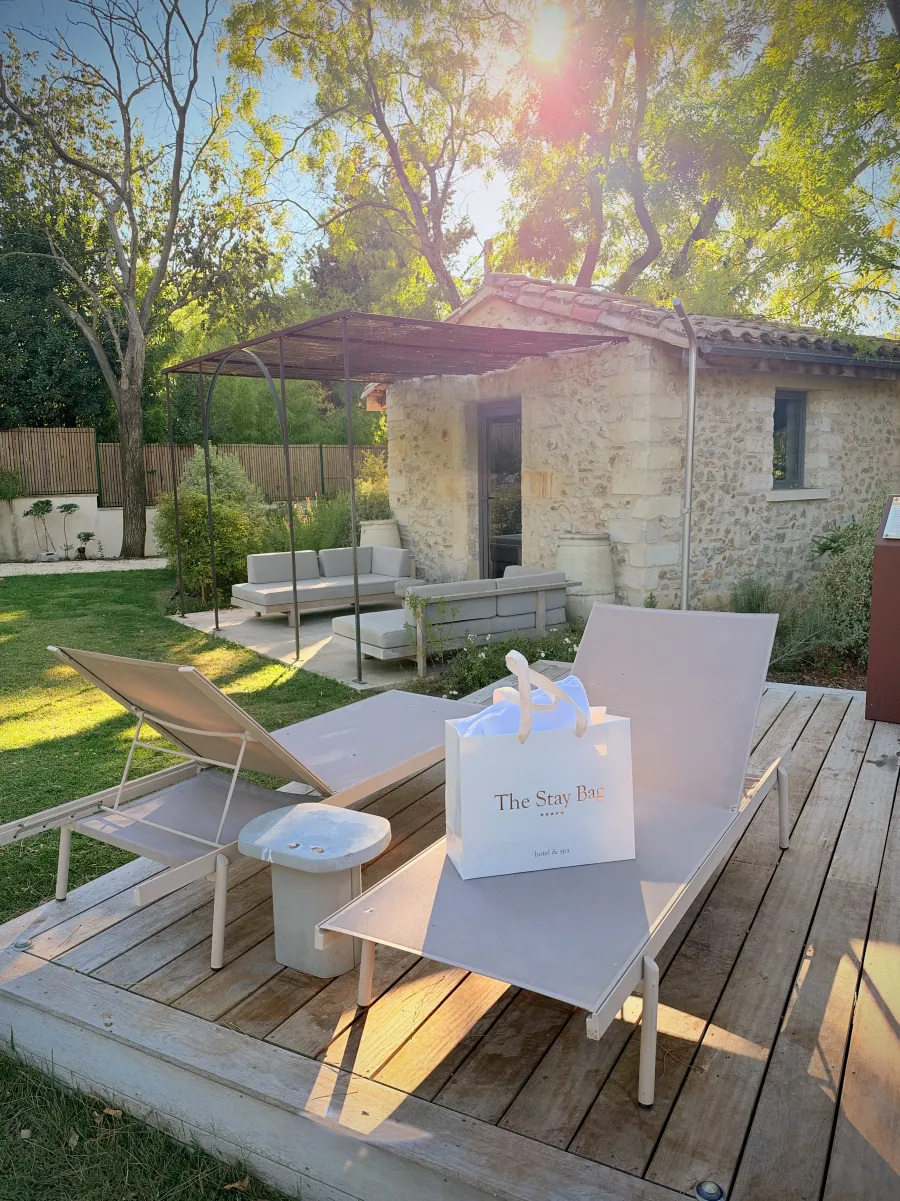
Hotel pool and spa bag: what stands up to water and sun cream
Water, steam, sun cream, a wet bench: the real tests a hotel pool and spa bag goes through, and how to try them before you order. Read the article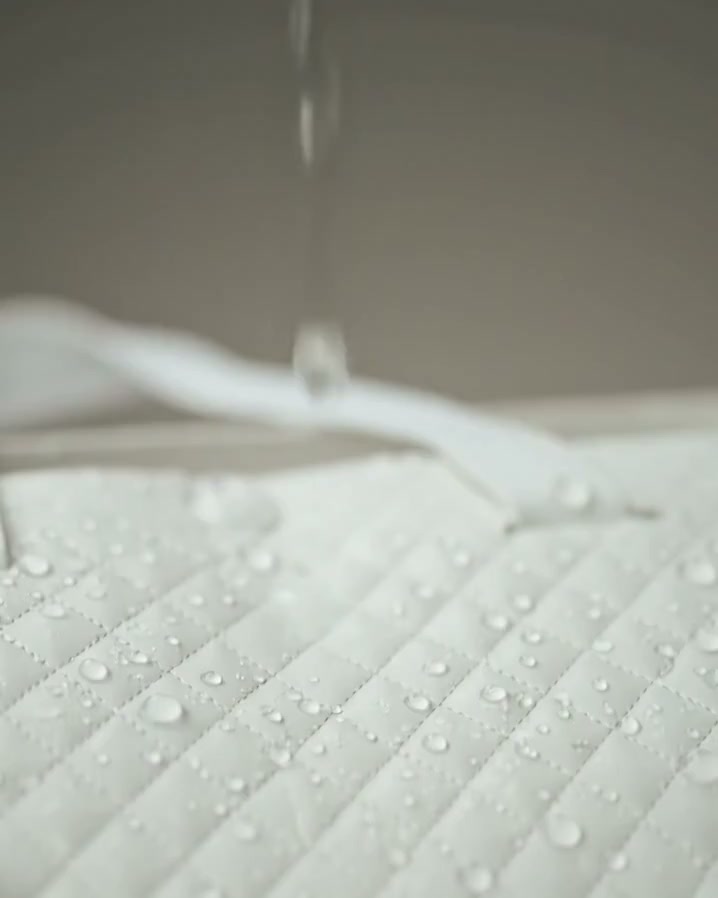
Waterproof labels: treated paper, plastic film or mineral material
Wine, champagne, fragrance, skincare: what happens to a treated paper, plastic film or mineral label in ice, water and grease. Read the articleNext step
A question about your print support? Let's put it on the table.
A bag, a label, a menu: we look at your item, compare it with the prototype, and you judge for yourself.